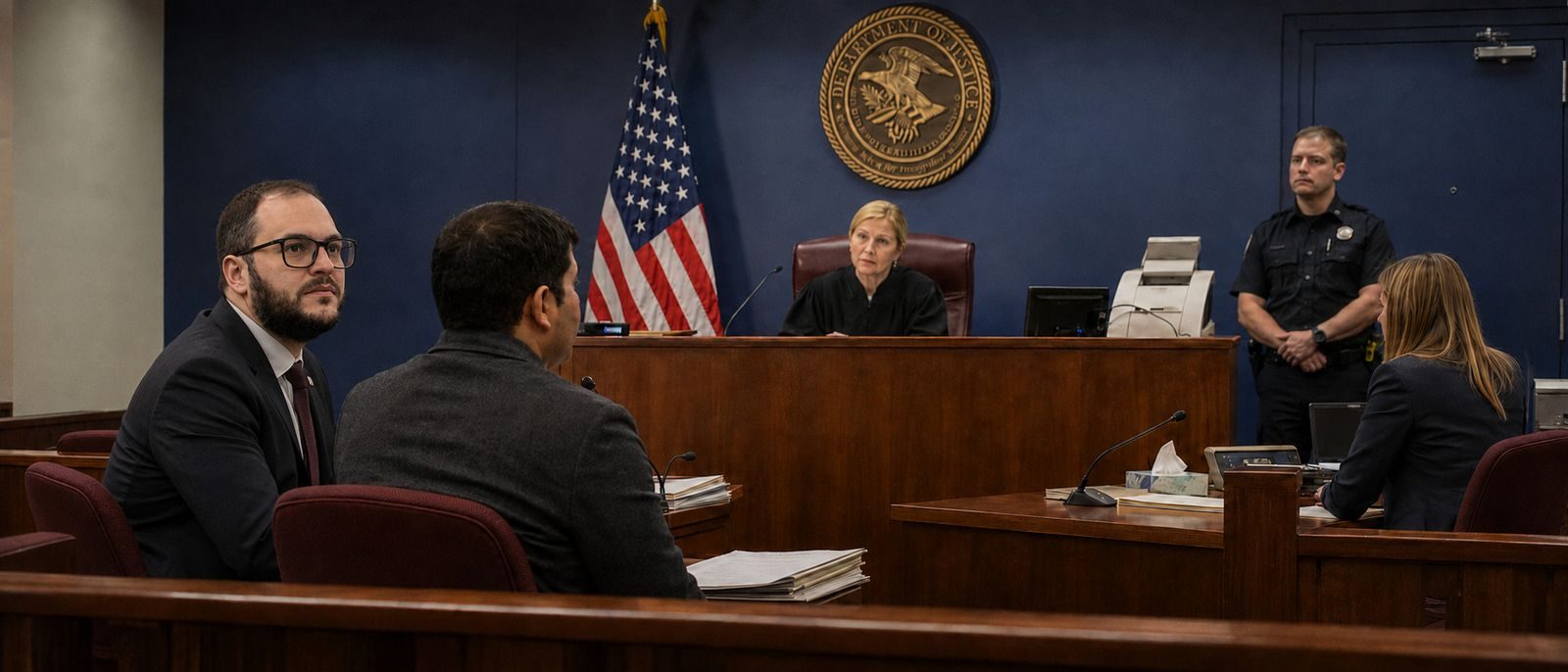
Interpreters at your asylum interview and your court hearing: who provides one, and who cannot
Your case is told in your words. The rules on who interprets them are different at USCIS and in immigration court, and a mistake can count as missing your interview.

Law checked November 3, 2026
The short version
- At a regular USCIS asylum interview, you must bring your own interpreter, at least 18 years old and fluent in English and your language. USCIS does not pay for one.
- Your lawyer, a witness in your case, and anyone who works for your country's government cannot be your interpreter. Showing up without a proper interpreter, without good cause, can be treated as failing to appear.
- USCIS arranges the interpreter for asylum merits interviews after a positive credible fear finding. In immigration court, an interpreter is provided if necessary, and interpreters swear to translate accurately.
An asylum case rests on your own account of what happened to you. If the person interpreting it gets a date, a name or a single word wrong, that mistake becomes part of the record. It can later look like an inconsistency in your story.
That is why the rules on interpreters matter. They are different at a USCIS asylum interview and in immigration court, so it is worth knowing which one applies to you.
At a USCIS asylum interview: you bring the interpreter
For a regular affirmative asylum interview, 8 C.F.R. 208.9(g)(1) puts the job on you. If you cannot proceed in English, you "must provide, at no expense to USCIS, a competent interpreter fluent in both English and the applicant's native language or any other language in which the applicant is fluent."
The interpreter must be at least 18 years old.
From 2020 to 2023, a temporary rule had USCIS supply interpreters by phone. That rule expired on September 12, 2023. Do not plan on USCIS providing one for a regular interview.
Who cannot be your interpreter
The same regulation lists three kinds of people who may not interpret for you:
- your attorney or representative of record;
- a witness who is testifying on your behalf; and
- a representative or employee of the government of your country of nationality, or, if you are stateless, of your country of last habitual residence.
A friend or relative who meets the age and fluency rules and is not a witness can serve. Choose someone who will translate exactly what you say, not a summary and not a better-sounding version.
When USCIS provides the interpreter
There is one exception. For asylum merits interviews of people who passed a credible fear screening at the border, under 8 C.F.R. 208.2(a)(1)(ii), the regulation says the asylum officer "shall arrange for the assistance of an interpreter." The same age limit and the same list of people who cannot serve apply.
If USCIS cannot find an interpreter for that interview, the rule says it will count the delay against itself for work permit purposes, so the delay does not stop your work permit clock.
In immigration court
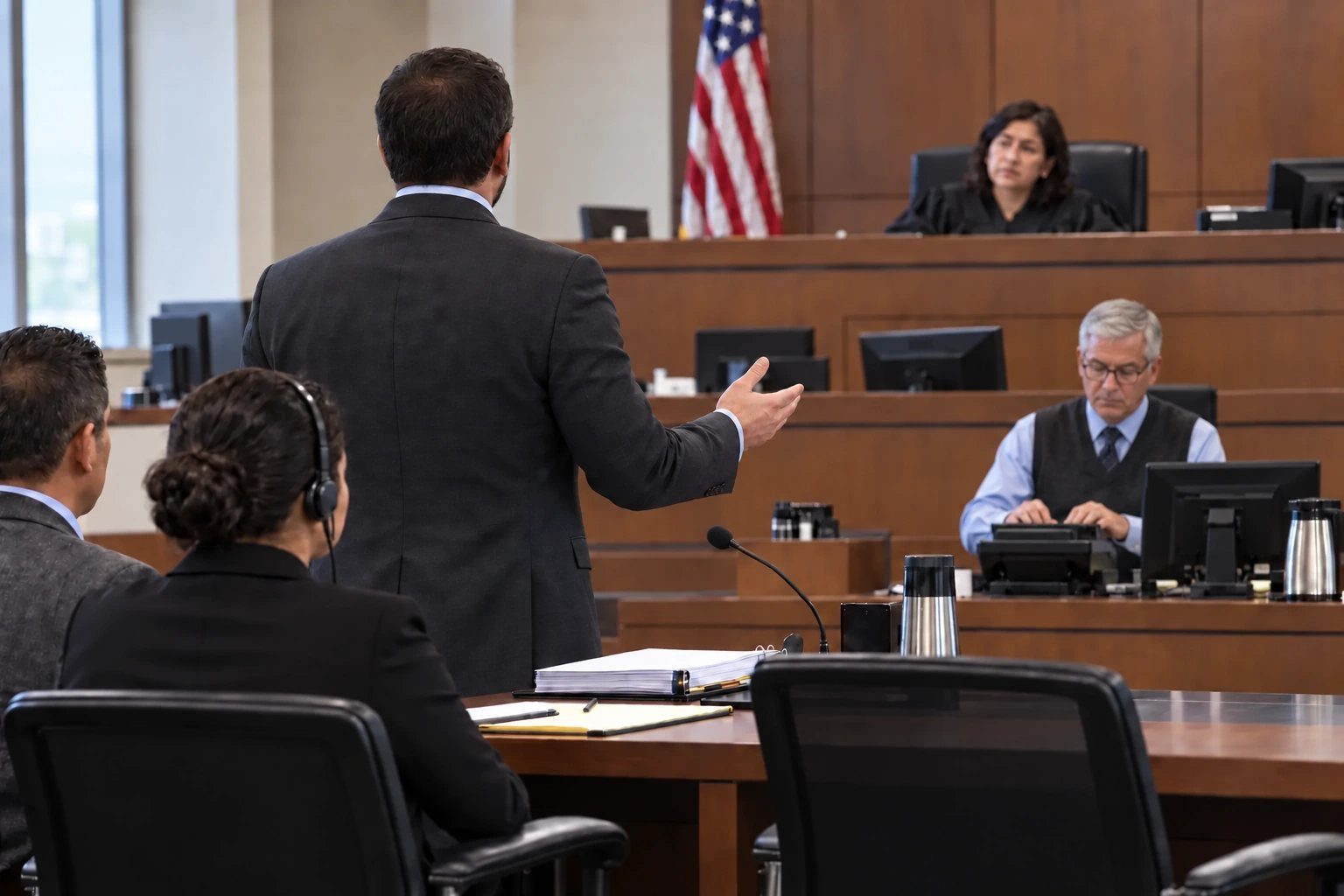
The court side works differently. At an individual (merits) hearing, the Immigration Court Practice Manual says an interpreter is provided if necessary. You do not bring your own, as you would at a USCIS interview.
Under 8 C.F.R. 1003.22, anyone acting as an interpreter in a hearing must swear or affirm to interpret and translate accurately, unless the interpreter is a federal government employee.
Tell the court your best language as early as possible, including the dialect. A Spanish interpreter does not help someone whose first language is K'iche' or Mam. Your lawyer can make sure the court has the right language on file before the hearing.
If something goes wrong
- Speak up in the moment. If you do not understand a question, say so. Do not guess at an answer.
- Answer in your own words and in short sentences, so the interpreter can keep up.
- Correct mistakes you hear. If you understand some English and hear a date or name translated wrong, tell the officer or the judge.
- Tell your lawyer right away. A problem raised during the interview or hearing is much easier to fix than one raised later. See why small inconsistencies can matter.
Prepare with the same care you give your declaration. Practice telling your story with your interpreter before the interview, and ask your lawyer which rules apply to your case.
Questions people ask
Can my lawyer interpret for me at my asylum interview?
No. 8 C.F.R. 208.9(g) bars your attorney or representative of record from serving as your interpreter. It also bars a witness testifying for you and any representative or employee of your country's government.
Does USCIS still provide phone interpreters?
Not for regular affirmative interviews. The temporary rule under which USCIS supplied telephone interpreters expired on September 12, 2023. USCIS arranges the interpreter only for asylum merits interviews after a positive credible fear finding.
What if I do not understand the interpreter in court?
Say so right away, to the judge, in the language you speak. Tell your lawyer too. A record of the problem made during the hearing matters much more than a complaint made afterward.
Sources
Every rule in this post was checked against these primary sources on November 3, 2026. Law in this area changes often; if you are reading this much later, ask a lawyer what has moved.
- 8 C.F.R. 208.9(g) (interpreters at USCIS asylum interviews)
- 8 C.F.R. 208.10 (failure to appear)
- 8 C.F.R. 1003.22 (interpreters in immigration court)
- Immigration Court Practice Manual ch. 3.15 (individual calendar hearings), EOIR Policy Manual
- Expiration of the temporary interpreter rule, 88 FR 16372 (Mar. 17, 2023)
More on this from other sources
- Trump administration held talks with Iran on deporting Iranians during the war, court documents show (opens PBS NewsHour in a new tab)
- No Notice, Know Problem: Immigration Court Edition (opens The Asylumist in a new tab)
- Türkiye: European Court to Rule on Istanbul Mayor’s Detention (opens Human Rights Watch in a new tab)
- In 100th lawsuit against Trump, California challenges immigration arrests near courthouses (opens Los Angeles Times in a new tab)
- ICE Says It Can Detain Immigrants as Long as It Wants. Will the Supreme Court Agree? (opens The Marshall Project in a new tab)
- More Sneaky Ways to Deny Asylum, Courtesy of the Asylum Office (opens The Asylumist in a new tab)
Headlines from other publishers, updated November 5, 2026. We link to them; we do not write or endorse them. All news and blogs
Videos worth watching
- Individual Model Hearing (John Doe, Case Number 123-456-789) (opens YouTube in a new tab)
- INTRODUCTION TO IMMIGRATION COURT (opens YouTube in a new tab)
- Master Calendar Model Hearing (John Doe, Case Number 123-456-789) (opens YouTube in a new tab)
Videos by other creators, picked for clarity. Older videos can show old fees or rules; the dates and amounts in our posts are current as of the date shown at the top.
Written by
Mitchell Bromberg, Esq.
Senior Associate · Admitted in NJ, NY
Mitchell Bromberg's practice centers on deportation defense, detained clients, bond proceedings, appeals to the Board of Immigration Appeals and motions to reopen removal orders. He earned his law degree at the Benjamin N. Cardozo School of Law and was admitted in New Jersey in 2023 and New York in 2024.