Missed your fingerprint appointment? What happens to your asylum case
Biometrics look like a formality. The rules treat them as a requirement, at USCIS and in immigration court, and a missed appointment without good cause can end the application.
Law checked November 4, 2026
The short version
- At USCIS, failing to follow fingerprint requirements without good cause may lead to dismissal of the asylum application or waiver of your right to a decision by an asylum officer.
- In immigration court, failing to provide biometrics within the time the judge allows counts as abandonment of the application, unless you show good cause.
- A missed appointment is excused if the notice went to a wrong address you had already corrected, or if exceptional circumstances caused it. Act fast and keep proof.
After you file for asylum, a notice arrives for a biometrics appointment: fingerprints, a photo and a signature at a USCIS Application Support Center. It takes minutes. It is easy to treat as a formality, and easy to miss if you are working, moving or the letter goes astray.
The rules do not treat it as a formality. Missing it can end your application, and the consequences are different depending on whether your case is with USCIS or in immigration court.
If your case is with USCIS
For an affirmative application, the rule is 8 C.F.R. 208.10, last amended in July 2026. It says that failing "to comply with fingerprint processing requirements without good cause may result in dismissal of the application or waiver of the right to an adjudication by an asylum officer."
Two exceptions are written into the same rule:
- Wrong address. The failure "shall be excused" if the notice "was not mailed to the applicant's current address" and you had already given USCIS that address, unless the officer finds you got reasonable notice anyway.
- Exceptional circumstances. It "will be excused if the applicant demonstrates that such failure was the result of exceptional circumstances."
If your case is in immigration court
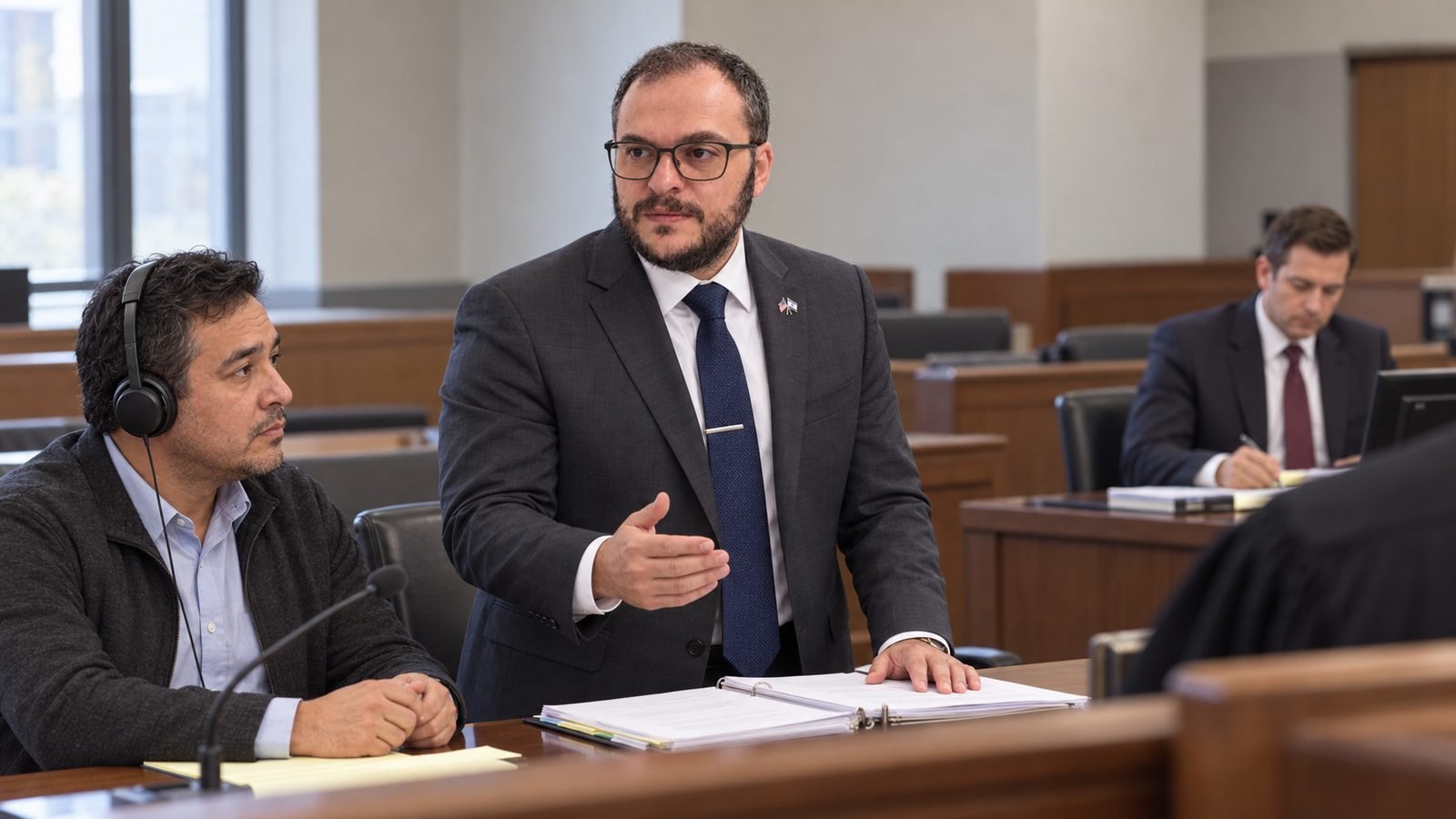
In court, the responsibility shifts to you. Under 8 C.F.R. 1003.47(d), the applicant must "make arrangements with an office of DHS to provide biometrics" before or as soon as practicable after filing the application in court. The judge sets a deadline.
The consequence is in 1003.47(c). Failing to provide biometrics "within the time allowed by the immigration judge's order, constitutes abandonment of the application," and the judge may dismiss it, "unless the applicant demonstrates that such failure was the result of good cause." The same applies to a spouse or child included in the application.
What happens at the appointment
A biometrics appointment is short and simple, which is part of why people underestimate it. At the Application Support Center, staff check your appointment notice and photo ID, take your fingerprints electronically, take your photograph, and record your signature. There is no interview about your case, and no one asks about what happened to you.
The fingerprints are used for identity and background checks. Your application cannot move forward until those checks are done, which is why both USCIS and the immigration court treat missing them so seriously.
If anyone in your family is included in your application as a spouse or child, they may receive their own notices and appointments. Each person must attend their own. A missed appointment for a family member can affect their part of the case.
If you already missed it
- Do not wait for the next letter. Contact USCIS, or your lawyer if your case is in court, as soon as you realize.
- Write down why you missed it and gather proof: a hospital record, a letter from an employer, evidence that the notice went to an old address.
- Check your address on file. If the notice went to an old address, collect proof of when you reported the new one. See our post on changing your address.
- Ask about rescheduling. The appointment notice explains how to reschedule. Do it before the date if you can.
How to avoid the problem
- Open every letter from USCIS the day it arrives, and photograph it.
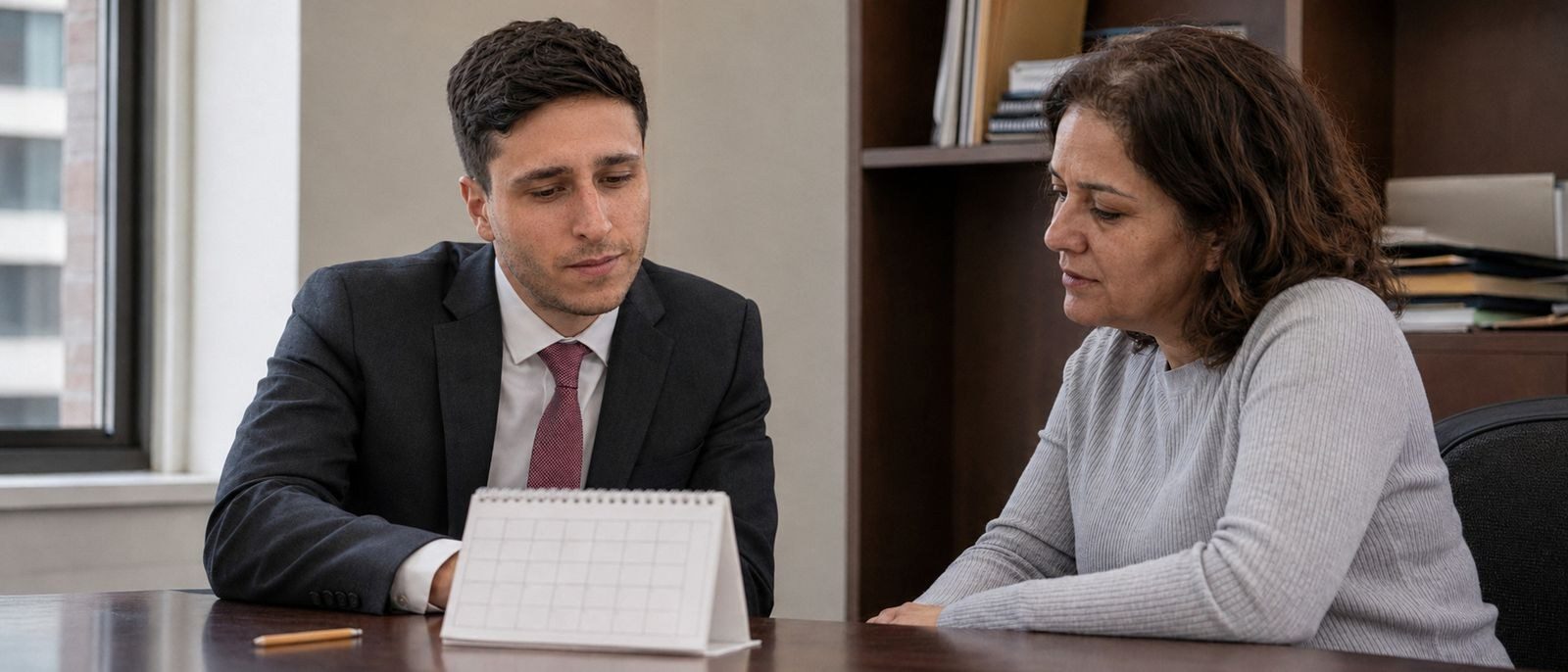
- Put the date in your phone with two reminders.
- Bring the appointment notice and a photo ID. The USCIS biometrics page lists what to bring.
- Keep the stamped notice or receipt you are given at the appointment. It is your proof you went.
- Keep your address current with USCIS and, if you are in court, with the immigration court.
Every case is different. If you received a dismissal or abandonment notice, speak with a lawyer about your options right away.
Questions people ask
What is a biometrics appointment?
A short visit to a USCIS Application Support Center where your fingerprints, photo and signature are taken for background checks. The appointment notice tells you where and when, and what to bring.
I missed it because the notice went to my old address. Is my case lost?
Not necessarily. Under 8 C.F.R. 208.10, a failure to appear is excused if the notice was not mailed to the current address you had already given USCIS. Gather proof of when you reported the new address and contact a lawyer.
My case is in immigration court. Who schedules biometrics?
You do, with DHS. Under 8 C.F.R. 1003.47(d), the applicant must make arrangements with DHS to provide biometrics before or as soon as practicable after filing. The judge sets the deadline.
Sources
Every rule in this post was checked against these primary sources on November 4, 2026. Law in this area changes often; if you are reading this much later, ask a lawyer what has moved.
More on this from other sources
- JetBlue hikes baggage fees for the second time this year (opens CBS News in a new tab)
- Litigation-Related Update: Sileiri Doe Class Members May Request Reopening or Reconsideration of an Adverse Decision Without a Fee (opens USCIS alerts in a new tab)
- USCIS Opens Asylum Office in Charlotte (opens USCIS alerts in a new tab)
- USCIS Announces FY 2027 Inflation Increase for Certain Immigration-Related Fees (opens USCIS alerts in a new tab)
- USCIS Adjusts EB-5 Fees to Cover Program Costs and Strengthen Integrity Measures (opens USCIS alerts in a new tab)
- Inflation Adjustment for EOIR OBBBA Fees; Fiscal Year 2027 (opens Federal Register in a new tab)
Headlines from other publishers, updated November 5, 2026. We link to them; we do not write or endorse them. All news and blogs
Videos worth watching
- Biometrics appointments (fingerprint appointments) for asylum seekers (opens YouTube in a new tab)
- Training: How to Fill out the USA Asylum Application Form (Full tutorial, Step-by-step form I-589) (opens YouTube in a new tab)
- How to Fill Out an Asylum Application (Form I-589) - Part 1 (opens YouTube in a new tab)
Videos by other creators, picked for clarity. Older videos can show old fees or rules; the dates and amounts in our posts are current as of the date shown at the top.
Written by
Mikhail Usher, Esq.
Founding & Managing Attorney · Admitted in NY, NJ, FL
Mikhail Usher founded Usher Law Group in 2013 and has represented immigrants for more than 15 years. He tries removal cases in immigration court and takes them to the Board of Immigration Appeals and the federal courts of appeals. Before opening the firm he clerked for Judge Amy Steele Donner in Dade County, Florida, and built the criminal division of a Brooklyn firm.